|
SOUTHERN CALIFORNIA NATIVE AMERICAN INDIAN TRIBAL GUIDES, MAPS OF RESERVATIONS PROJECTS
Here is an alphabetical tribal index guide to 17 federally-recognized Native American Indian tribal bands in Southern California. Indigenous tribal bands may include San Diego County, Riverside County, Orange County, Los Angeles County, Imperial County, San Bernardino County.
For additional information and research about the sovereign tribal governments and businesses, including their community contact information, phone numbers, addresses, social media, official tribal websites, casino gambling and resort websites, news, and tribal logos:
TRIBES | CONTACT | LANGUAGES | SOVEREIGNTY | STATISTICS | COMMUNITY | SOCIAL SERVICES | FAQ
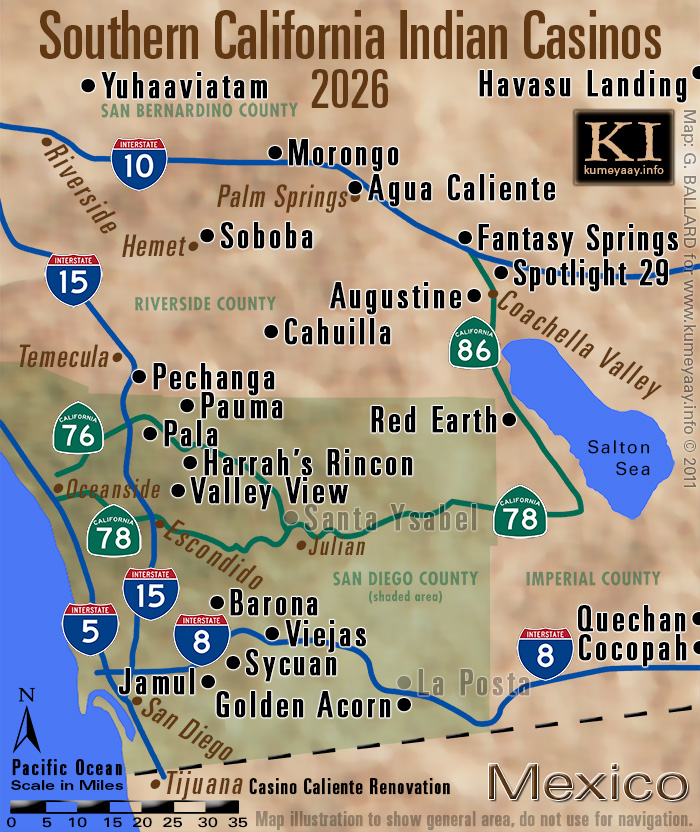
 SOUTHERN CALIFORNIA INDIAN CASINOS LOCATOR MAP (below) SOUTHERN CALIFORNIA INDIAN CASINOS LOCATOR MAP (below)

HOW TO CONTACT San Diego County Reservations:
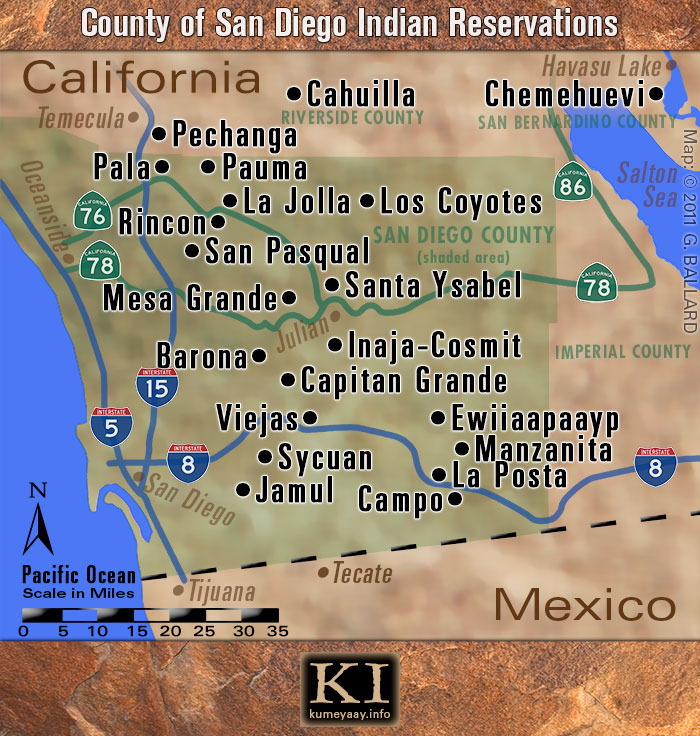
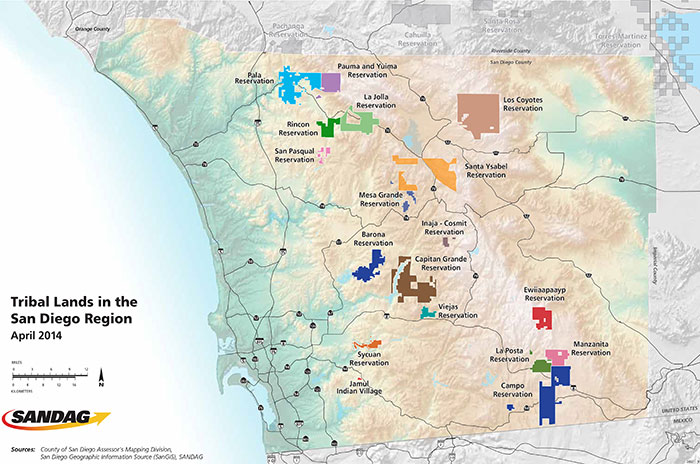
FACTS: With some 17 Native American Indian bands and 18 reservations, the County of San Diego has more tribal reservations than any other county in the United States.
Kumeyaay Indian reservations pinpointed locations on our map:
- Barona Band of Mission Indians
- Cahuilla Band of Mission Indians
- Campo Kumeyaay Nation
- Chemehuevi Indian Tribe
- Ewiiaapaayp Band of Kumeyaay Indians
- Inaja-Cosmit Band of Indians
- Jamul Indian Village A Kumeyaay Nation
- La Jolla Band of Luiseño Indians
- La Posta Band of Mission Indians
- Los Coyotes Band of Mission Indians
- Manzanita Band of the Kumeyaay Nation
- Mesa Grande Band of Mission Indians
- Pala Band of Cupeño Indians
- Pauma Band of Mission Indians
- Rincon Band of Luiseño Indians
- San Pasqual Band of Diegueño Mission Indians of California
- Iipay Nation of Santa Ysabel
- Sycuan Band of the Kumeyaay Nation
- Viejas Band of Kumeyaay Indians
- Yuhaaviatam of San Manuel Nation (not on above map, but on Casino map below)
The above California tribes-bands include member bands of the SOUTHERN CALIFORNIA TRIBAL CHAIRMEN'S ASSOCIATION SCTCA:

SOUTHERN CALIFORNIA TRIBAL CHAIRMEN'S ASSOCIATION (SCTCA) is a great resource for important information about how to contact the SOCAL tribal representatives directly.
DOWNLOAD

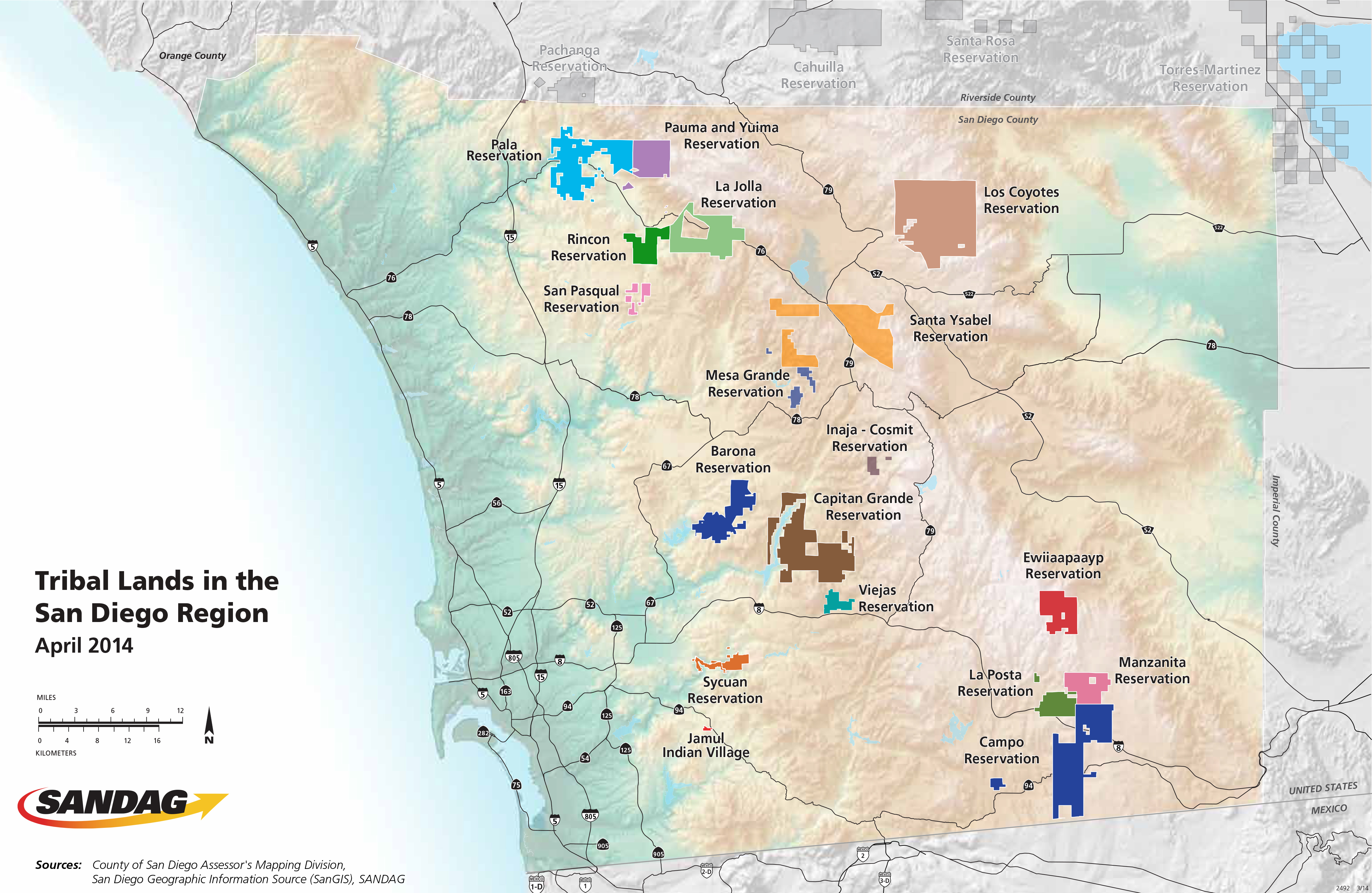
The County of San Diego Assessor's Mapping Division produced the ultimate Tribal Lands in the San Diego Region -- suitable for academic research and finely detailed enough for navigation.
SOURCE | SANDAG WEBSITE:
San Diego County has 17 federally recognized tribal nations governing 18 reservations, the most of any county in the U.S.
These sovereign lands cover over 127,000 acres (about 4% of the region). The San Diego Association of Governments (SANDAG) collaborates with these nations on regional planning, infrastructure, and resource protection.
Tribal Nations and Reservations in San Diego County:
- Barona Group of Capitan Grande Band (Barona Reservation)
- Campo Band of Diegueño Mission Indians (Campo Reservation)
- Ewiiaapaayp Band of Kumeyaay Indians (Ewiiaapaayp Reservation)
- Inaja and Cosmit Band of Mission Indians (Inaja and Cosmit Reservation)
- Jamul Indian Village (Jamul Reservation)
- La Jolla Band of Luiseño Indians (La Jolla Reservation)
- La Posta Band of Diegueño Mission Indians (La Posta Reservation)
- Los Coyotes Band of Cahuilla and Cupeño Indians (Los Coyotes Reservation)
- Manzanita Band of Kumeyaay Indians (Manzanita Reservation)
- Mesa Grande Band of Diegueño Mission Indians (Mesa Grande Reservation)
- Pala Band of Mission Indians (Pala Reservation)
- Pauma Band of Luiseño Indians (Pauma & Yuima Reservation)
- Rincon Band of Luiseño Indians (Rincon Reservation)
- San Pasqual Band of Diegueño Mission Indians (San Pasqual Reservation)
- Santa Ysabel Band of Diegueño Mission Indians (Santa Ysabel Reservation)
- Sycuan Band of the Kumeyaay Nation (Sycuan Reservation)
- Viejas Band of Kumeyaay Indians (Viejas Reservation) (Note: Capitan Grande is jointly held by Barona and Viejas).
HISTORICAL Way Back:
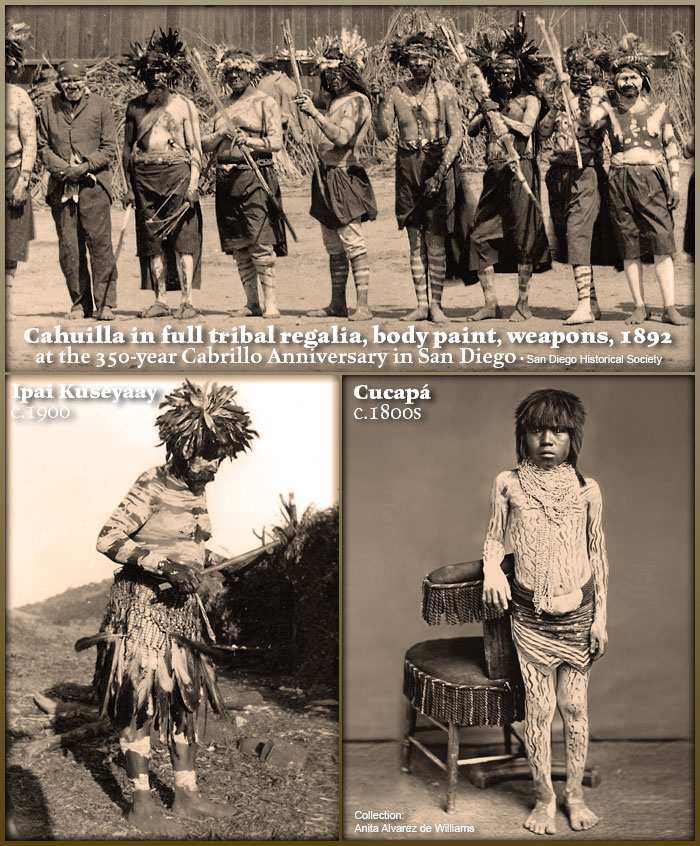
ORIGINAL TRIBAL CULTURE...
The Cahuilla tribe is considered Indigenous to the San Diego region. The Cucapá tribe is one of two Yuman tribes categorized within the so-called Hokan Delta-California language group -- the Kumeyaay tribe is the other.
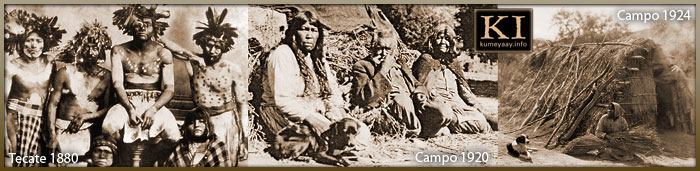
The tribesmen in the above set likely have distinct markings identifying their tribal bands to each other -- if you know what to look for.
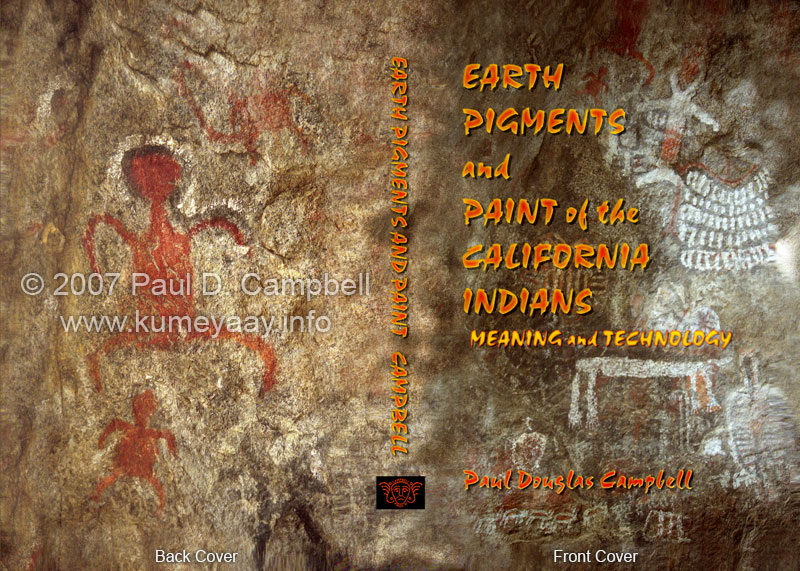
DEEP DIVE into Prehistoric Culture...
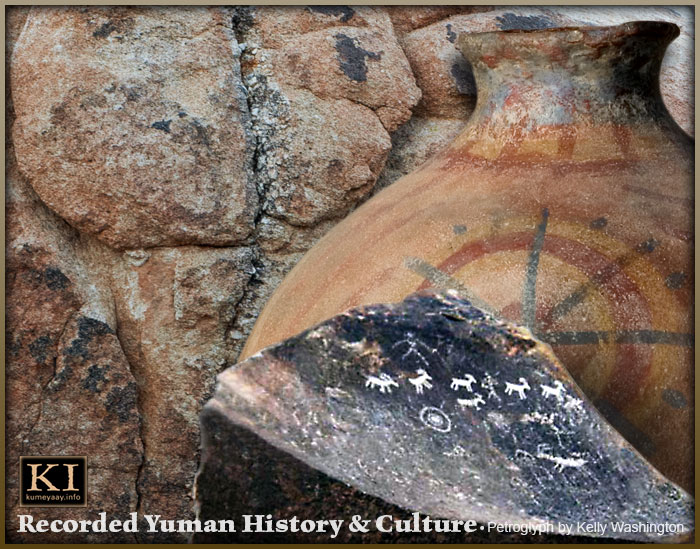
Traditional recorded Indigenous history:
Southern California Aboriginal tribes preserved their culture in two basic mediums: 1) Orally through Storytelling and Bird Singing, (2) granite sculptures, petroglyphs and pictographs....
The Yoni granite sculpture background in this composited graphic was photographed at Indian Hill, Anza Borrego Desert State Park in 2004 -- notice the dark aged paint, it must have been all painted up in celebrated form. The rare painted Polychrome olla was found in the late 1900s in western Imperial County. The Petroglyph rock was photographed by Kelly Washington in 2004 at Vii Kwame, a sacred mountain for many of the Yuman tribes.
Kumeyaay at the Turn of 21st Century
and the social media:
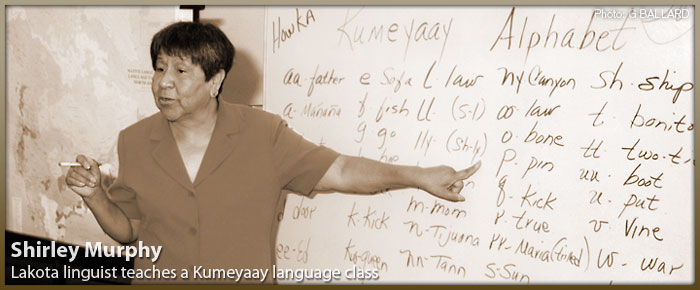
Through modern multi-media photojournalism and mass communications, The Kumeyaay Information Village website provides rare contemporary socially-significant windows into the Aboriginal tribal cultures, storytelling, fiesta gatherings, ceremonies, dancing, singing and music of the Southern California Indian peoples:
USA Kumeyaay

Click.
Our unique social content documents Kumeyaay housing, lifestyles and human faces of the California Indian peoples as they existed at the turn of the 21st century:
Kumiai de México:

Click.
Los indios indígenas de las fotos documentales de la forma de vida del photojournalism de México representan películas.
|