 |
 |
|
|
KUMEYAAY LANGUAGE DEPARTMENT
HOKAN GROUP OF THE YUMANS The Kumeyaay tribe has been categorized within the so-called Hokan Delta-California group of the Yumans. "Hokan" references an academically-defined group of about a dozen languages spoken mostly by Yuman Native American Indian tribes in Arizona, California, and Baja California, Mexico. The Hokan group includes Cocopah, Kumeyaay, Maricopa, Quechan, Mohave, Pai Pai, Yavapai, Havasupai, and Hualapai. JUMP DOWN PAGE for a complete index of Hokan languages. The Kumeyaay language spoken by today's Kumeyaay speakers include a northern dialect (Iipay) and a southern dialect (Tiipay). Kumeyaay.info explores the linguistics, spellings and vocabulary of the Native American Indian tribe known today as the "Kumeyaay" -- aka Diegueño, Kamia, Ipai-Iipay-Iipaay, Tiipay-Tiipai-Tipai-Tipaay (several alternate spellings), Kumiai. KWAHUP: Come In! (Kumeyaay)
Learn how to pronounce Kumeyaay: Ku-me-yaay -- Coo-me-eye Coo (like a dove coos) HOWKA SAM TEACHES "HOW TO PRONOUNCE KUMEYAAY" in this 1-minute audio video:
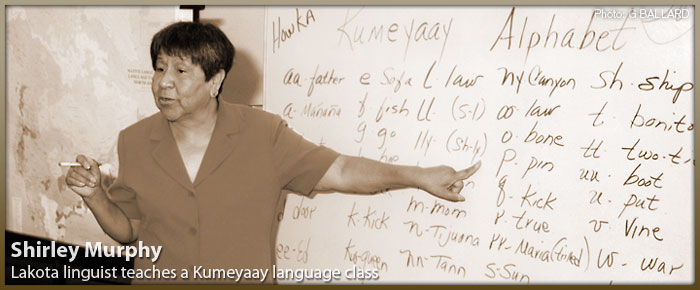
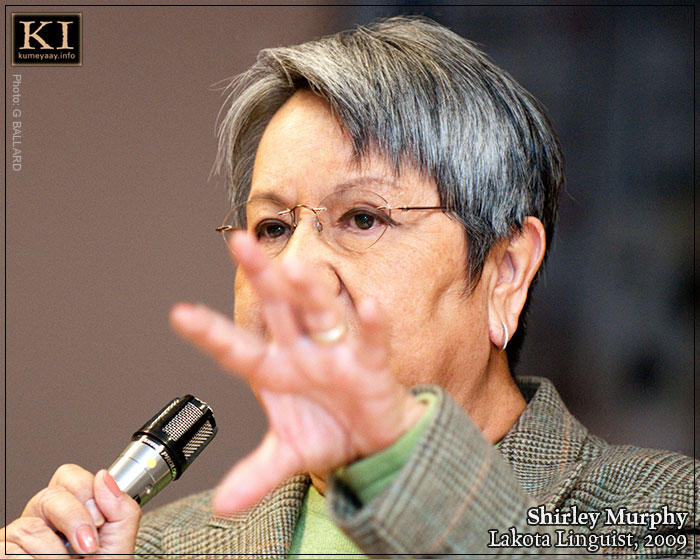
CULTURAL RENAISSANCE As Director of the Kumeyaay Community College (formerly D-Q University at Sycuan) Shirley Murphy was instrumental in the turn-of-the-century Indigenous cultural renaissance in the County of San Diego by establishing accredited language and cultural programs on the Sycuan reservation. Yuman song leaders and Native speakers from various local reservations in the region participated in her popular cultural programs as visitors, teachers and mentors.
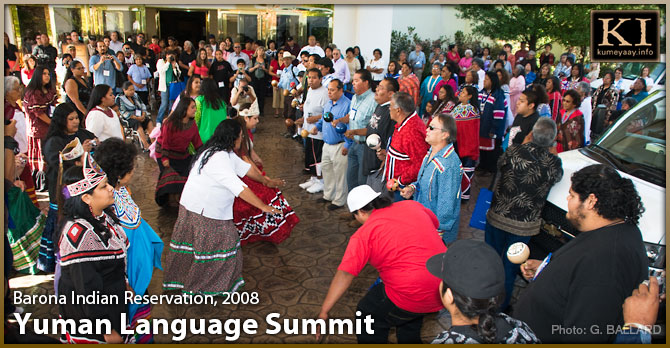
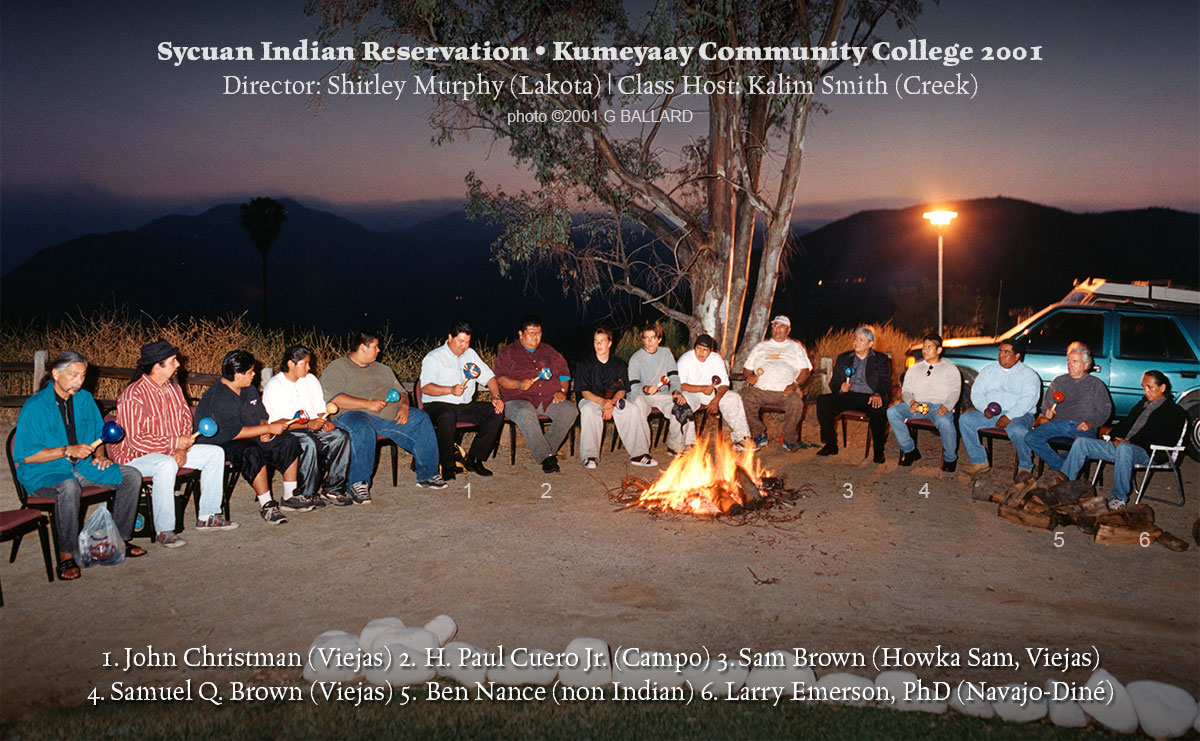
Yuman language singers (above), Sycuan Indian Reservation, Kumeyaay Community College students and mentors, are pictured atop a mountain in this photograph around a burning campfire learning and singing some of the timeless traditional "bird songs" of their Indigenous Yuman ancestors.
Shirley Murphy is a turn-of-the-century visionary who worked at the forefront of bringing digital technology and Native participation into accredited reservation-based university programs and workshops to provide Aboriginal people the knowledge, guidance and tools to preserve and build on their historic tribal records -- to tell their own stories as 21st-century parents, social reporters and future tribal historians.
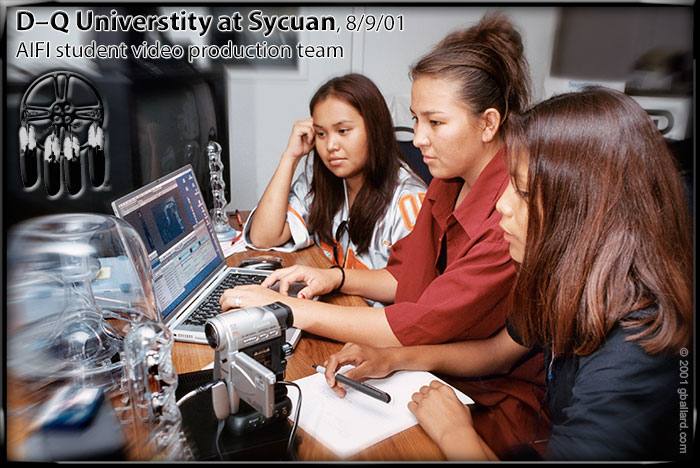
A young female American Indian student team pictured editing their cultural audio-visual multimedia project on a period PowerBook G4 Titanium PowerPC Apple computer running OS-X Cheetah (10.0), Final Cut Pro 2, iconic clear Harman Kardon SoundSticks-Subwoofer USB speakers, from a sourced Canon PV1 digital camcorder in a D-Q University Sycuan campus classroom. This portable creative editing station setup was state-of-the-art in 2001. The MacBook was probably running Adobe Photoshop 6 to edit their photographs and graphics. It probably had 128-256GB RAM installed, 8MB SDRAM (video GPU), USB 1.1 (1.5 MBs), FireWire 400 (40 MBs), ATA/66 internal SATA harddrive (60MBs), and the original Apple SuperDrive (CD-RW/DVD-R) for burning the movie SD DVD format. This 2001 hardware was excruciatingly slow by 2026 technology. The video clips on the timeline would have taken overnight to RENDER a 4GB SD (standard definition 720x480) video project, and the morning to write it to movie DVD disc using Apple's DVD Studio Pro software and built-in SuperDrive DVD-R max 1X write speed. And if the process glitched -- which it did frequently back in the day -- you had to delete all the render files and start the rendering over again and/or try writing it again to fresh DVD media....
LANGUAGE TRANSLATION Kumeyaay Language Written Story TRANSLATED into English "The Rabbit Versus the Rattlesnake" first paragraph:
Kumeyaay MOVIES On-line Videos, DVDs, Movie Theater
KUMEYAAY LANGUAGE AUDIO RECORDINGS of Native Kumeyaay speakers with English translations:
WIKIPEDIA has a detailed write-up on the Hokan languages though it does NOT contain any reference to Kumeyaay, Kumiai, Diegueño, Tipai, Ipai, Kamia (the Kumeyaay Tribe). That's confusing -- are the Kumeyaay included in the Hokan group or not? |
||||
HOKAN LANGUAGE FAMILY GROUP:The HOKAN LANGUAGES www.native-languages.org are spoken in the southwestern and west coast of the United States of America, and in northwestern Mexico (Baja California and Sonora). VISIT NATIVE LANGUAGES WEBSITE for deeper academic information on these areas. The Hokan language family includes: Delta-Californian Languages:
River Yuman Languages:
Upland Yuman Languages:
Cochimi Kiliwa Esselen Karok-Shasta Languages:
Chimariko Pomo Languages:
Salinan-Seri Languages:
Tequistlatecan Languages:
Washod -source and specific in-depth information: native-languages.org |
||||
|
YUMAN LANGUAGE LINKS RESOURCES
Teaching Indigenous Languages jan.ucc.nau.edu
|
||||
| Terms of Use • Privacy Statement • Site Map Kumeyaay Indians Home • About Us • Mission Statement • Press Kit • Contact Us |



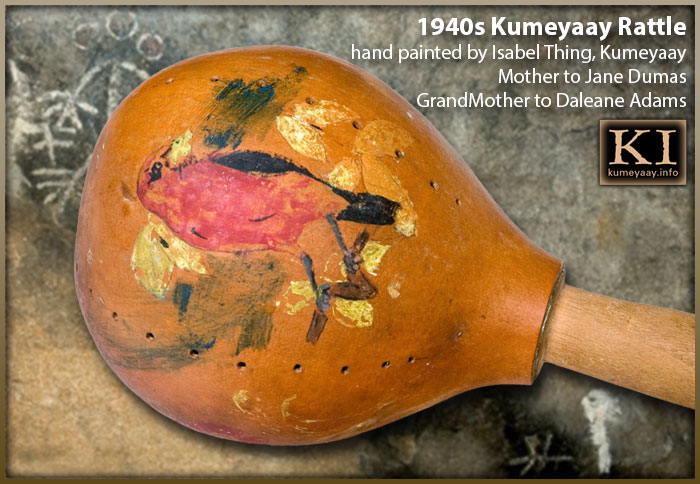
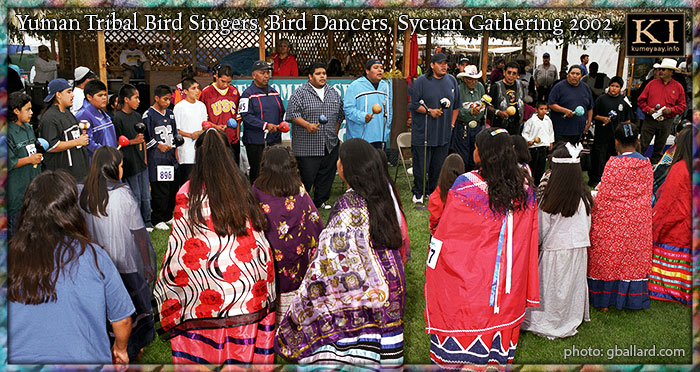
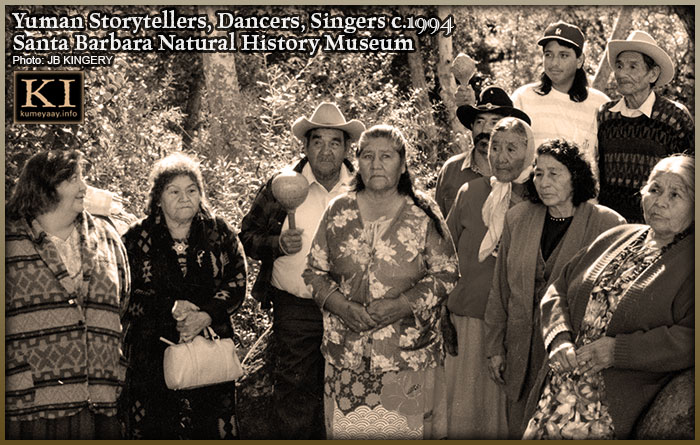
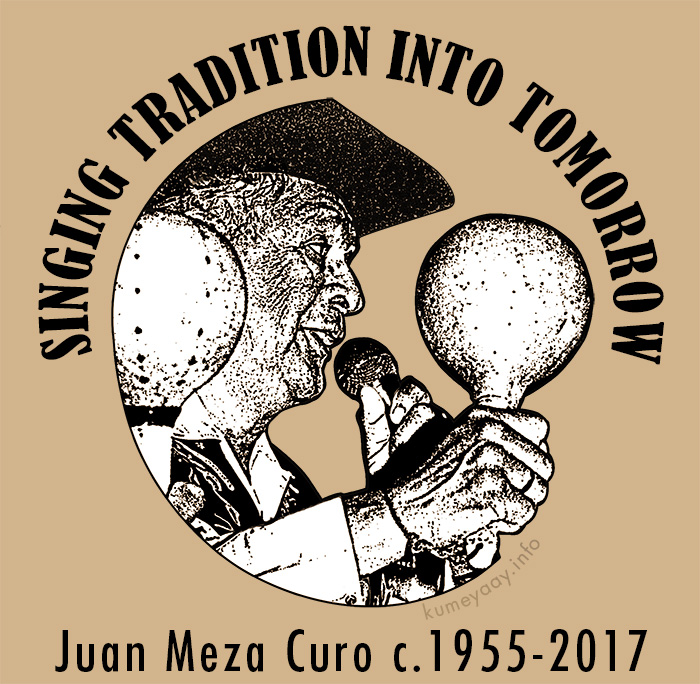
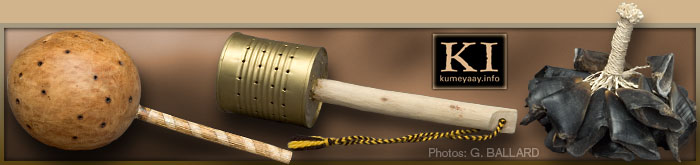 MUSICAL INSTRUMENTS, rattles, history, construction, movies, singing, dancing.
 SOUTHERN CALIFORNIA tribal photojournalism multimedia documentaries