
Cocopah Indian Beaded Jewelry
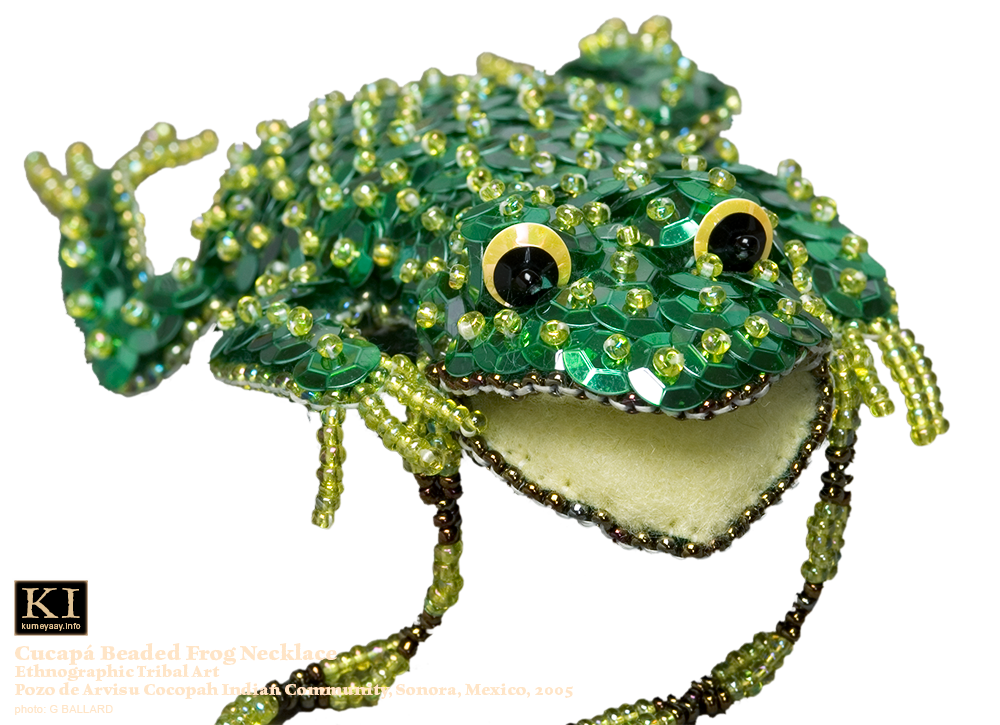
CUCAPA INDIAN BEAD ART of Pozo de Arvisu Cucapá Indian Community, Sonora, Mexico, is pictured in this 2005 photo are small hand-made beaded pins of tribal ladies in traditional regalia, animals frogs covered in colorful sequins with beaded necklaces -- the webmaster blended these two photographs together for the layout -- the frogs are actually much larger compared to the ladies in real life.
In 2005, there were several Native American Indian jewelry artists eking out a living in this small tribal ejido as professional ethnographic artists. Some of their tribal art finds its way across the the US-Mexico border in California Indian stores like Shumup Ko Hup, powwow and cultural booths -- but the authentic Cucapa beaded art is pretty easy to spot because of the artists' exceptional use of tribal colors, and fine quality of the hand work.
HISTORICAL INDIAN VINTAGE POSTCARD ca. 1900:
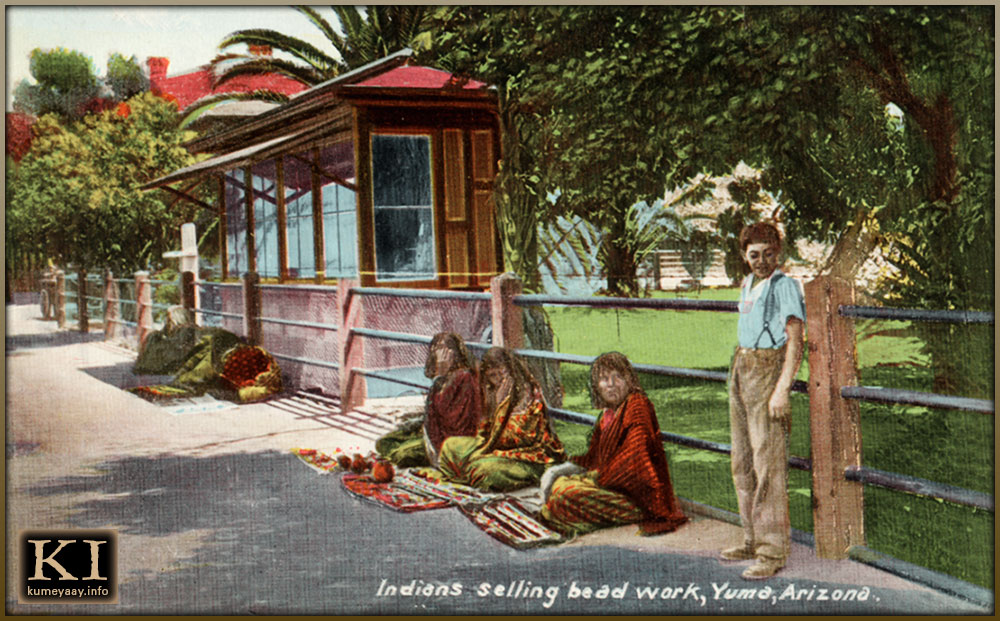
This historical antique hand-colored postcard drawing depicts three Native American women selling Indian bead work with a young immigrant boy looking away and downward in a scene titled "Indians selling bead work, Yuma, Arizona."
Aboriginal peoples of this tribal region include the Cocopah and Quechan, Colorado River tribes.
Information on the backside of the vintage collectable card includes: Van Ornum Color Print Co, Los Angeles; Pub. by Souvenir Publishing Co. Los Angeles, San Francisco, AR19, On the Road of a Thousand Wonders.
I scanned an original color print of the train postcard for The Kumeyaay Information Village website -- can't speculate if this was produced from a hand-painted photograph or an artist's painting -- but it most likely was printed c.1900 as a novelty tourist postcard inasmuch for its early color printing technology and stereotypical statement about American Indians surviving in the turn of the 20th century.
Today's more professional ethnographic Cocopa bead artists include: MARIAN HUCK | ELIZABETH CORTEZ | GUADALUPE PESADO | MAURICIA WILSON | ISABEL PESADO | ARONIA WILSON | ERONIA TAMBO | AURELIA CANEDO
| Webmaster OP-ED
Colonial Propaganda Analyze the period 1900 immigrant mindset: |
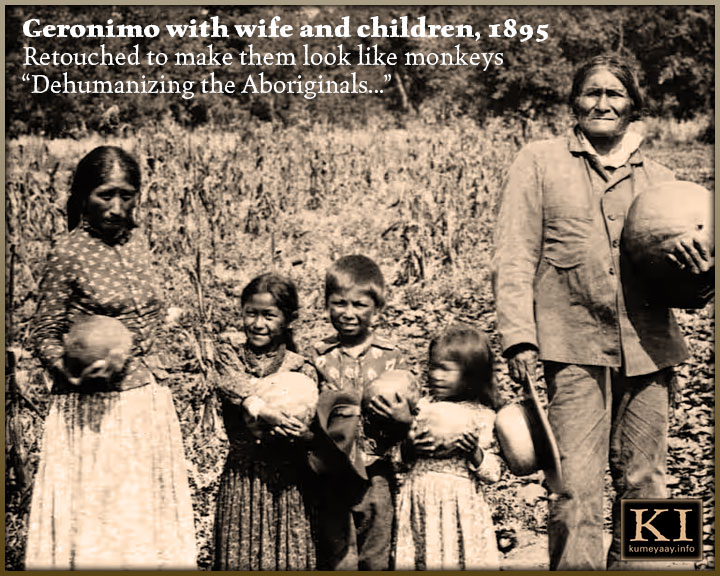
 With 50 years in professional photography, my Super Power is reading pictures -- and this one reeks of intent. The color postcard scene (c.1900) is designed to subhumanize the Indigenous women. Two hide their faces and one looks up to the boy. The immigrant boy looks away and downward with a smirk on his face like he can't stand to get any closer for fear of catching the cooties. It's a classic propaganda ploy to ease the minds of good people. Treating people cruelly, cancelling and dehumanizing them (after doing them wrong) is how the subconscious mind suppresses guilt. Good people have natural empathy and moral conscience. Many immigrant settlers likely had personal struggles with how the Indigenous people were treated (the neglect and genocide, how their fathers and grandfathers "acquired" tribal lands and resources). This manufactured image (I doubt if the postcard scene is an actual unaltered photographic record) helps good people trivialize the Aboriginals as subhuman and ease their minds by painting a picture of immigrant white superiority and entitlement above the Natives. As a human being, I find the postcard offensive though it (and the Geronimo family below) are most likely common stereotypical statements for the period. This altered photo of Geronimo is another example of this dehumanizing propaganda in historical pictures: Look at Geronimo's wife -- her face and middle part hairline been significantly altered to make her look like a monkey. Geronimo and even the children appear to have the dark-shaded retouching under their cheekbones and furrowed brow enhancements.... |
Buy genuine authentic tribal beaded art
A Yuman Indian woman selling beads in 2006 on the reservation:

POW-WOW ETHNOGRAPHIC ART BOOTH: Eva Salazar's Shumup Ko Hup's cultural store booth represents her 60-tribal artists co-op of hand-made traditional arts and crafts items for sale -- notice the fine quality, variety and authenticity of the items (opens high resolution photo).
Terms of Use • Privacy Statement • Site Map • Kumeyaay Indians Research